Tuesday, July 13, 2021

How to get benefit of Pradhan Mantri Jan Arogya Yojana (PMJAY) ?


Medical Insurance is becoming popular now a days in India and COVID-19 has provided a big push for quantum jump in its popularity. However, those who need it most can afford it least. The weaker section of the society who is pulling on their daily life on stressed financial budget cannot, in spite of their best intentions, afford medical insurance. This is an irony of our society. An incident of a hospitalisation for a poor family pushes the family in a debt trap. If the breadwinner of the family has to be hospitalised, the financial wound becomes deeper, leaving long-lasting implications on the family. The aged people with no earning capacity and no savings have to suffer the pain – they are more vulnerable but less cared for. In order to provide universal free health care to all eligible citizens, the Government of India first announced the Ayushman Bharat Yojana as a universal health care plan in February 2018 in the Union budget of India. The Yojana has been touted as the world’s largest health care programme in the world. An important milestone under Ayushman Bharat is the Pradhan Mantri Jan Arogya Yojana (PMJAY) which was launched on 23/09/2018 by our Honourable Prime Minister Shri Narendra Modi.

The features of the PMJAY:

1. It is a means tested (eligibility based on the economic position of the family) scheme. The households included are based on the deprivation criteria of Socio-Economic Caste Census 2011 (SECC 2011) and occupation for rural and urban areas respectively.

2. It subsumed the old Rashtriya Swasthya Bima Yojana (RSBY) which was introduced in 2008. Hence, PM-JAY covers families that were covered in RSBY but are not present in the SECC 2011 list. The beneficiaries under Employee State Insurance Scheme (ESIS) are also covered.

3. PM-JAY is fully funded by the Government and cost of implementation is shared between the Central and State Governments. It is implemented under the aegis of National Health Authority.

4. Hospitalisation (in public and private empanelled hospitals in India) expenses to the extent of Rs. 5,00,000/- (Rs five lakh only) is provided to the family per year.

5. PM-JAY provides cashless access to health care services for the beneficiary at the point of service, that is, the hospital.

6.  It covers up to 3 days of pre-hospitalization and 15 days post-hospitalization expenses such as diagnostics and medicines.

7. There is no restriction on the family size, age or gender.

8. All pre–existing conditions are also covered from day one.

9. Beneficiary can avail the medical treatment from any empanelled public or private hospital across the country.

10. Services include approximately 1,393 procedures covering all the costs related to treatment, including but not limited to drugs, supplies, diagnostic services, physician's fees, room charges, surgeon charges, OT and ICU charges etc.

11. The cap on benefit of Rs. 5,00,000 per year is  on a family floater basis which means it can be used by one or more members of the family.

12. COVID-19 patients can avail free treatment at empanelled hospitals.


Who Is Not Eligible for PMJAY?

The people falling under one or more categories are not eligible for PMJAY:

  • Those who have mechanised farming equipment.
  • Who owns a two, three or four-wheeler.
  • Those who hold a Kisan card.
  • Government employees.
  • Those who own a motorised fishing boat.
  • Those who are earning more than Rs.10,000 per month.
  • Those who are working in government-run non-agricultural enterprises.
  • Those who own more than 5 acres of agricultural land.
  • Those who own landline phones or refrigerators. 
  • Those who live in decently built houses.


How to apply online for Ayushman Bharat Yojana?

Follow the following steps for applying online for PMJAY card (popularly known as a Gold Card):

-  Visit the Ayushman Bharat Pradhan Mantri Jan Arogya Yojana official website at https://pmjay.gov.in/

- Click on ? mark (“Am I Eligible”) icon (on right hand top corner).

- Enter your contact details (mobile number), Captcha code and generate OTP.

- Select your state

- Select Category (Search your name by your name or mobile number (if registered in (SECC) Socio Economic and Caste Census 2011) or HHD (a 24 digit Household Id number given to each family in SECC 2011) or Ration Card number)

- If you search by Name, fill in your  name,  Father’s name, Mother’s name, Spouse’s name, your gender, age, district name, village name, area(Rural / Urban), PIN Code, etc. Care: if the details are not filled in properly, you might not find your name in the list even though you are in the eligible list.

- Click on 'Family Members' tab to find the family members listed in SECC database

- HHID is also available along with the details of the family members. Note down the HHID on a piece of paper for reference in future.

- Click on “GET DETAILS ON SMS” and fill up your mobile number and Captcha code and Click on submit button.

- A message will appear on the screen “SMS has been sent to your mobile number XXXX. Thank you”.

- With this SMS, visit a CSC (Common Service Centre) or Community Health Centre/ Empanelled Hospital in your vicinity.

- Each member of the family has to give the biometrics (finger print) which will be verified with Aadhar database to confirm the identity of the beneficiary. The photo and other details are auto-populated from the Aadhar database and printed on the card.

- Each member is given a separate PMJAY Card (Gold Card). The card is required to avail the benefit under the AB-PMAJY.

- Family members can be added due to birth or addition due to marriage or name of a family member is left out due to some genuine error.

- Alternatively, you can approach any Empanelled Health Care Provider (EHCP) or dial the Ayushman Bharat Yojana call centre number: 14555 or 1800-111-565 to know whether you are eligible or not under PMJAY.

- To know the details of benefits under the PMJAY, just send Hi on WhatsApp Number

+91 98689 14555 (Just Ask Master Ayushman service).


Progress so far:

More than 12.58 crore cards (till March, 2021) have been issued under the PMJAY. It has been lauded as the largest universal health care initiative in the world. It has earned many accolades from the international organisations, including World Health Organisation. The scheme aims to cover 50 crores beneficiaries. By the end of June 2021, as many as 1,91,32,000 patients have availed the hospitalisation treatments worth Rs 13,412 crore through a network of 21,565 public and private empanelled hospitals. The National Health Authority has also prepared detailed guidelines to issue eCard to the beneficiaries.

Disclaimer: The information given in the blog is only for general awareness and must not be construed as a professional advice. Readers are advised to consult the professionals in any subject matter of the blog before acting on the information discussed in the blog. The readers who are acting otherwise are doing so at their own risk.

(The reader’s comments are welcome at gnpatel@gujaratinfotech.com)

=0=0=

Thursday, April 29, 2021

Things to know about browser Cookies for online privacy

How do cookies work?
While working for the Netscape Lou Montulli invented the cookies in 1994 in order to monetize the website and make it a remunerative business. In the initial phase of its use, it was not widely known to the public, as it was used surreptitiously, and as a result it dtd not attract any adverse attention of the users. The website would not inform the user about the use of cookies and the user’s acceptance of cookies use was by default. Its grey was small and tentacles were few and short during the nascent phase. Aversion to cookies gradually rose only after the Financial Times (USA) published an article about cookies in 1996. Now there are elaborate laws for data protection to protect the net users from imperceptible presence of the cookies behind the screen. Now wwebsites have their cookies policy.

The website asks the user if the accept the cookies or not. If the user clicks, AGREE/ACCEPT ALL/YES, the browser will create the cookies. If you do not accept, you can visit the website in most of the cases but the website may not function as intended. The cookies will start tracking your net usage and store the data only you accept the cookies. The cookies would be stored on your PC (locally) or would be transmitted to the host server. When you visit the same website again, cookies will come into play. The cookies saved locally on the device or transferred from the server, will help you to fill up the form, login data, preference of language, etc and will also continue further to garner and accumulate more and more your tracking data while you are surfing the net. The “enriched” cookies will be stored locally on the device or on the host server, waiting to jump into your browser as and when you access the website next time. Quite smart and stealthy creature!

Types of cookies (Without classifying the cookies in a particular class):

[1] Necessary / Required Cookies
These are the basic cookies and without them the functioning of the website will be sub-optimal as they enable the basic functions of the website. This type of cookies cannot be disabled.
[2] Statistical / Analytics Cookies
These cookies are used for collecting data regarding the interaction of the user with the website and reporting the same anonymously. This helps to measure the activity of the users and improve the functionality of the website.
[3] Marketing Cookies
Primary purpose of these cookies is for marketing of products and services and depict relevant ad. They collect data on user behavior and interest and prepare User Profile and show ad/ link / banner as per the profile. Apart from marketing intelligence, various demographic, social and political profitable inferences can also be drawn.
[4] First-Party Cookies
Some cookies may pack more of a threat than others depending on where they come from. First-party cookies are used by the website user is using. These are less risky if the website is reputed one and have not been compromised.
[5] Third-Party Cookies
Irrespective of clicking by the user, the ad / link / banner on the website generate the cookies which are called Third-party cookies. They are more shrewd and risky. If there are, say 5 cookies on the website, 5 cookies will be generated even if the user does not click any of them. They help the advertisers or Analysts track netizens, browsing data across the web on any sites that display their ads.
[6] Zombie cookies
These cookies are bit pervert and would get generated without users’ Acceptance. They are Third-party and stay permanently on users' computers. Like a phoenix bird, they would get regenerated even after deleting. They are also known as “flash cookies” and are extremely difficult to remove. These cookies can be deployed to prevent the certain users.
[7] Session cookies
These cookies are “ephemeral” in terms longevity and according they are also called 'temporary cookies'. They store the user’s data for a particular session of use of the website and on closure of the browser, they are deleted. They are used for shopping from online stores.
[8] Permanent cookies
They will be stored on the device even after the web site is has closed. They store login ID and passwords so that web users don't need to re-enter them on next visit of the website. They are required to be deleted after certain months as prescribed in the data protection laws of the respective country.
[9] Tracking Cookies

If you are an avid net user, you must have registered / subscribed for a particular interest with a particular organisation/website. While you are doing this, Tracking Cookies are generated. Next day you would find lots of unsolicited promotional marketing material in your email account from many organisations from nook and corner of the world. The data generated by Tracking Cookies are shared by other unintended organisations/websites also, for pre-arranged mutual gains or otherwise.

How to block cookies:
The cookies serve useful purposes but your personal data are vulnerable to misuse. So you might have some aversion to them. If that is the case, when you visit the website, you can decline the acceptance to all the cookies (Except Necessary) but the performance of the website will be sub-optimal. Or you can Accept only particular type of cookies. This type of functionality is available in all the popular browsers in Settings.

Removing / Deleting the Cookies:
Cookies can be removed but bear in mind that your interface with the website will not be so smooth in their absence. Though, it is very difficult to remain anonymous / incognito while using the web, it is advisable to delete the Cookies to protect your privacy. This functionality is available in the browsers (generally under History > Clear Browsing Data).

Data security while on net:
It is pertinent to add here that use of public Wi-Fi is more susceptible to eavesdropping / hacking of personal data while use of VPN provides more cyber security to personal data. Likewise, TLS / HTTPS also provides more cyber security as the data is transmitted in encrypted format.

What are Cookies?
Putting the complex digital concept in simple words: Cookies are a small text file created by the browser to keep track of user’s language preference, login information, surfing behavior, usage of apps, shopping behavior, clicks on links/ads/banners, IP addresses, geographical location, currency, interests, due date of renewal of payable installed tools/software, etc while the user is surfing a website in order to use these data later, when the user visits the website again, in order to streamline the delivery of curated/tailored content, focused search results, relevant information and marketing ads, better feedback/communication, improved site performance/browsing satisfaction and, in most of the cases to manipulate the user’s data for a small pecuniary gains, for the website, through commission based on Pay Per Click.

Why were cookies invented?
Initially it was invented to keep track of the things an online shopper puts in the virtual shopping cart (say purchases) in a particular session of online shopping. Really a useful tool and true to their name, cookies were initially not despised by the net users. With the advent of IT, cookies were exploited to serve wider purposes.

It can store the data of the websites visited, frequency, duration, time, purpose, preferences, shopping behavior, pattern of navigation from host website to third party advertisements/banners/tags/links, etc. Host website can keep track of clicks on the ads and generate revenue on the basis of Pay Per Click (PPC). The cookies help fill up the forms on net as the cookies, based upon the past usages, knows what data are to be filled up and as soon as you open the form, the data are automatically filled in – auto populated. If the cookies have doubts if there more alternative probable choices, they show the choice which user can fill up just by clicking from the drop down list.

Cookies can also help decide the host server what pages to send in case of searching on net. It is like a family doctor who knows more about your health than you do and would diagnose the disease better with least questions asked. Now the flip side: as is the case with many of modern inventions, unscrupulous people have exploited the cookies into harming tools for undue gains. In beginning period of use of the cookies, they were gradually sneaked into the website, without an informed consent of the user and put to malicious use: as a stalking tool to track the online behavior of the netizens. They generate and store data regarding the net user’s online behavior and many sensitive information. The unscrupulous people / organization sells these data for money and put the data security of the unsuspecting net users at risk. Data is very important input for devising marketing strategy, political campaign, business rivalry, product innovation, Public Policy, etc. Depending upon the level of the negligence of the net users, design of the website and architecture of the host server, the data can be also misused to a wider extent.

The cookies are a micro cyber version of famous fictional detective Mr Sherlock Holmes. Though this cannot be generalized in the cases all websites using cookies, risk remains there as the hunger for users personal data is increasing day by day, coupled with sophisticated methods of hacking and network eavesdropping. As the science of Data Analytics is becoming stronger, so the need for data. Better to be aware and beware.

Conclusion:
There are strict laws for data protection in all the countries but still misuse of personal data collected through the cookies is rampant.
The cookies are necessary evil. Be on own guard.
=0=0=0==0=0=0==0=0=0=

(The comments of the readers are welcome at gnpatel@gujaratinfotech.com)

Sunday, March 7, 2021

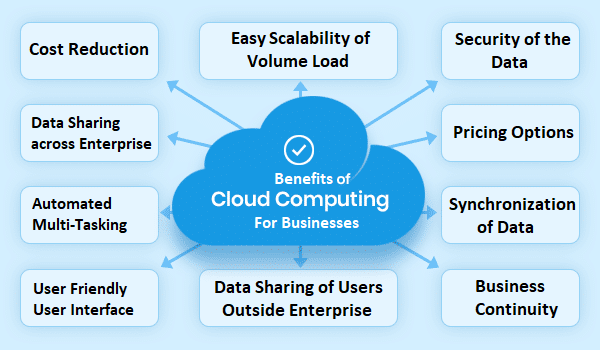
Benefits of Cloud Technology for Businesses


What is Cloud Technology?

It is an internet based off-site data storage and retrieval facility with add on facilities of providing data computing services and resources, generally for multiple clients. This type of a Cloud is called a Public Cloud. There are Clouds serving only a single organisation (Enterprise Clouds), called a Private Cloud. However, generally the Clouds are owned and operated by third party Cloud services providers for multiple clients. A modern man uses the Cloud Technology everyday but remains unaware of its use. If you are using Emails, Social Media, Video streaming services, IoTs, Weather App, Web Searches, etc, you are using cloud technology. The Clouds not only provides services for storage of data but it also provides other computing facilities like Software as a Service (SaaS), Platform as a Service (PaaS), etc.

Benefits of the Cloud Technology:

[1] Cost Reduction

To store the data safely, businesses need a Server Room. Setting up a Server Room is costly as it needs space, servers, air conditioning, fire safety equipments, CCTV Cameras, physical access control measures, etc. Disaster Recovery arrangement is also required. The businesses can obviate all these cost and also hassles if the services of Cloud Technology are availed.

[2] Sharing of the Data across the Enterprise

The data can be shared seamlessly on realtime basis by all the users irrespective of the location of the users, time of the access and the device used to access the data. What a great boon in the era of “Work Form Home”.

[3] Sharing of the Data with the Users outside the Enterprise

The data can also be shared in a secured and staggered manner with the users outside the enterprise e.g. customers, suppliers, buyers, investors, etc. This saves lots of time to provide services to customers and plugs the leakages in communication. Online shopping is a good example of availing benefits by this functionality.

[4] Automated Multi-tasking

Local hard-disk or on-site server are fast but when facing multi-tasking by a user or multiple users, they fall short of expectations of users regarding the speed. Given the high capacity of the Cloud for handling automated data flow coupled with speed of the internet, speed satisfies the expectations of multiple users at a time.

[5] User Friendly User Interface

Setting up and maintaining the Cloud services as such are ticklish jobs, even for an IT expert. However, for the user, it is very easy to upload or download the files as the interface is user friendly.

[6] Device Agnostic System

The Cloud works seamlessly with multiple types of devices (PC, laptop, tablet, mobile, etc) at the user end.

[7] Easy Scalability of Volume Load

As the Clouds have massive capacity to handle voluminous data, the CSPs can satisfy the storage need of the client on demand. This convenience cannot be expected if a business has its own data storage facility. As the CSPs have multiple clients, the increase and decrees in the demand stands counter-balanced so their capacity remains optimally utilised benefiting the clients in terms of pricing.

[8] Pricing Options

The CSPs offer various pricing options based on Time Used, Per User, Data Volume and permutations based on these factors (Hybrid Option). These options help the clients to choose the right pricing model and save the cost.

[9] Security of the Data

When connected via internet, safety of data remains the top most concern for the clients and it is more so when the data is uploaded in the servers owned by the third party at a faraway location, mostly unknown to the clients. This concern is well addressed by various physical and digital measures (firewall, encryption, back-ups at other location, etc) by the CSPs. The level of security is higher than what is available at in-house data centre/ server room. As the CSPs are big corporates like Google Cloud, IBM, Amazon, Microsoft Azure, Alibaba etc they can afford large sum for the purpose which individual could not afford. Further, it is not all about money but it is also about having talented manpower in the team.

[10] Business Continuity

Data could be lost due to various reasons like technical failure of the hardware, virus, sabotage, piracy, natural hazards, fire, short-circuit, etc. Business can face tough time to run the shop in a normal way. The chances of such untoward incident will be practically nil in view of the multi-layer security measure deployed by the CSPs. If the businesses avail the Cloud services, it is also a sound alternative to Disaster Recovery measure.

[11] Synchronization of Data

Cloud vendors provide the synchronization functionality. With this feature, user can sync the cloud storage data with other devices, seamlessly.

[12] Standardisation

Though every user of a computer follows standard procedure and dots the  I’s and cuts the T’s, the output/ deliverables are not so standard for variety of reasons. The use of Cloud helps to standardise the input and generate more standardised output/ deliverables.

Disadvantages of the Cloud Technology:

[1] Dependency on Internet

Internet is the mainstay of Cloud Technology. In data technology, the internet has made the geography irrelevant but if the same internet is not available or slow, the user is hamstrung.

[2] Data Security and Privacy

Though the Cloud Services are well equipped to maintain the data security, there are incidents of hacking. Depending upon the law of the land, an authority of a Sovereign Government can compel to divulge the data under given circumstances.

[3] Downtime

If the Cloud service is facing a power outage, a DoS (Denial of Services) attack buy a digital rogue, a technical glitch, a shutdown for maintenance, your own data will not be available till the problem is fixed.

Origin of the name Cloud:

The cloud symbol was used to represent networks of computing equipment in the ARPANET (Advanced Research Project Agency Network, USA) as early as 1977. As such it is a metaphor, having nothing to do with clouds in the sky.

How it works:

Before advent of the Cloud Technology, organisations used to store their data in removable hard-disk or Servers. Servers could be on-site or off-site. The Cloud Service Providers (CSPs) setup the server facility with massive capacity to store the data for the clients. This facility could be at one location or distributed across the globe, close to demand centres.

Future of the Cloud Technology:

The volume at which the data is generated every day is so massive that the adjectives like exponential and astronomical are poor to give the correct picture of the situation. The digital yardstick of Byte (Kilobyte to Yottabyte) is also small to measure the volume. The need and greed for data of businesses are increasing. Data has become a precious commodity in the modern world. Managing and manipulating data for commerce, communication, eGovernance, and entertainment are at the forefront of computing. Under such circumstances a question arises in the mind: What is the future of the Cloud Technology in the world of computing. The answer is: The Cloud Technology is the future of computing. 

If needed any consultation, please do not hesitate to contact us at 8448444245 or info@gujaratinfotech.com for any kind of requirement related  to Cloud Services from Amazon and Microsoft Azure" or Visit - www.gujaratinfotech.com

 =0=0=0=

(The comments of the readers are welcome at gnpatel@gujaratinfotech.com)